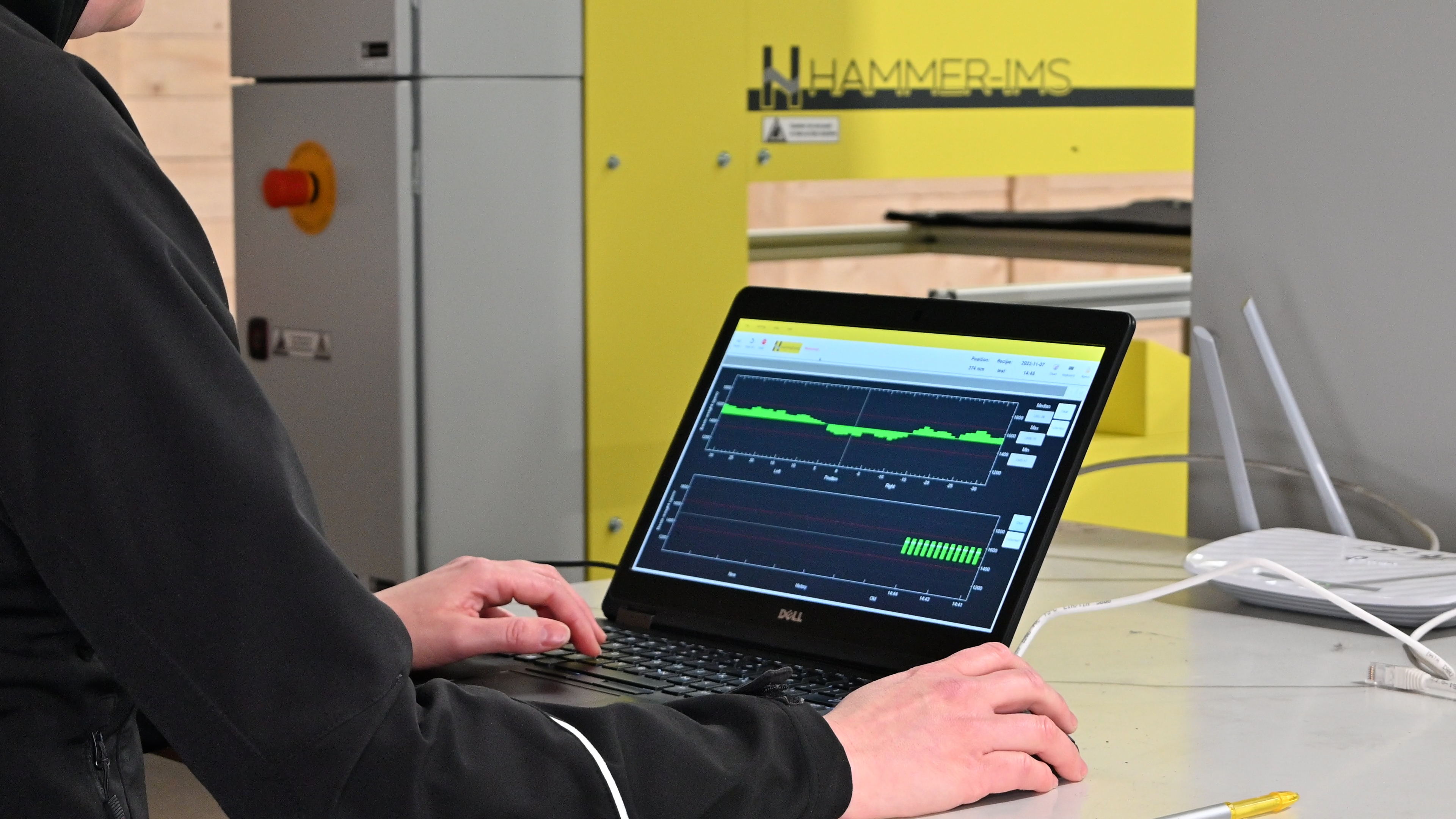
In modern manufacturing, "good enough" is no longer the standard. To meet the demands of high-precision industries, you need an eye that never blinks. Hammer-IMS’s Edge-Vision system provides exactly that. But how do we take a complex production challenge and turn it into a fully autonomous AI inspection solution?
In this post, we break down the step-by-step project flow that ensures a seamless integration into your production line.
Phase 1: Design & Integration
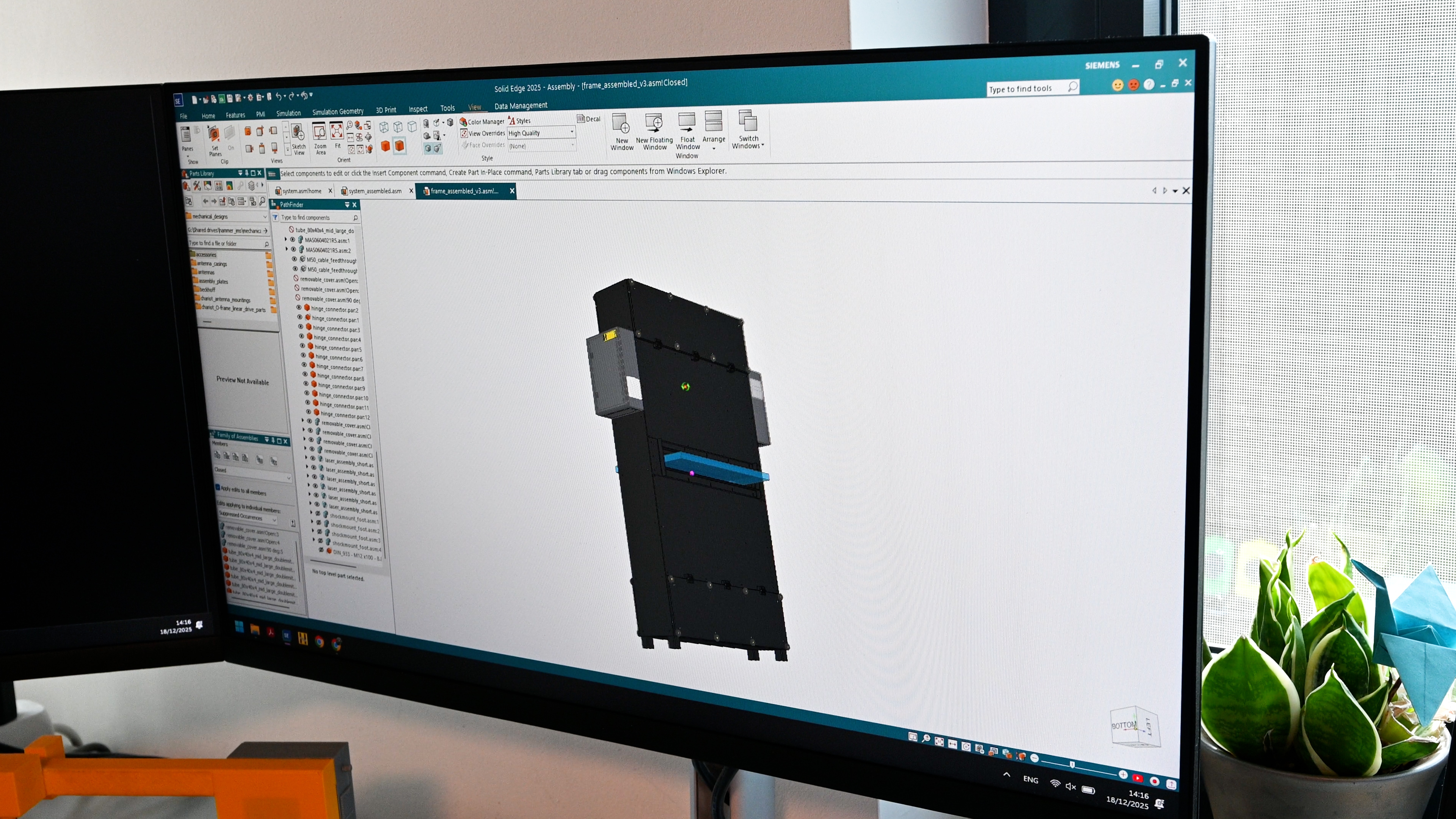
Every production line has its own DNA. That’s why every project starts with deep-dive technical meetings. Our mechanical team collaborates closely with the customer to ensure the Edge-Vision system is custom-built to fit the physical constraints and requirements of your specific line.
Phase 2: Commissioning & Initial Capture
Once the hardware is shipped and installed, our experts move to the commissioning phase. During this stage, Hammer-IMS personnel visit your site to:
Calibrate the high-speed cameras.
Configure data communication protocols.
Deploy the initial software version to capture "baseline" images of clean, defect-free material.
Phase 3: Teaching the AI
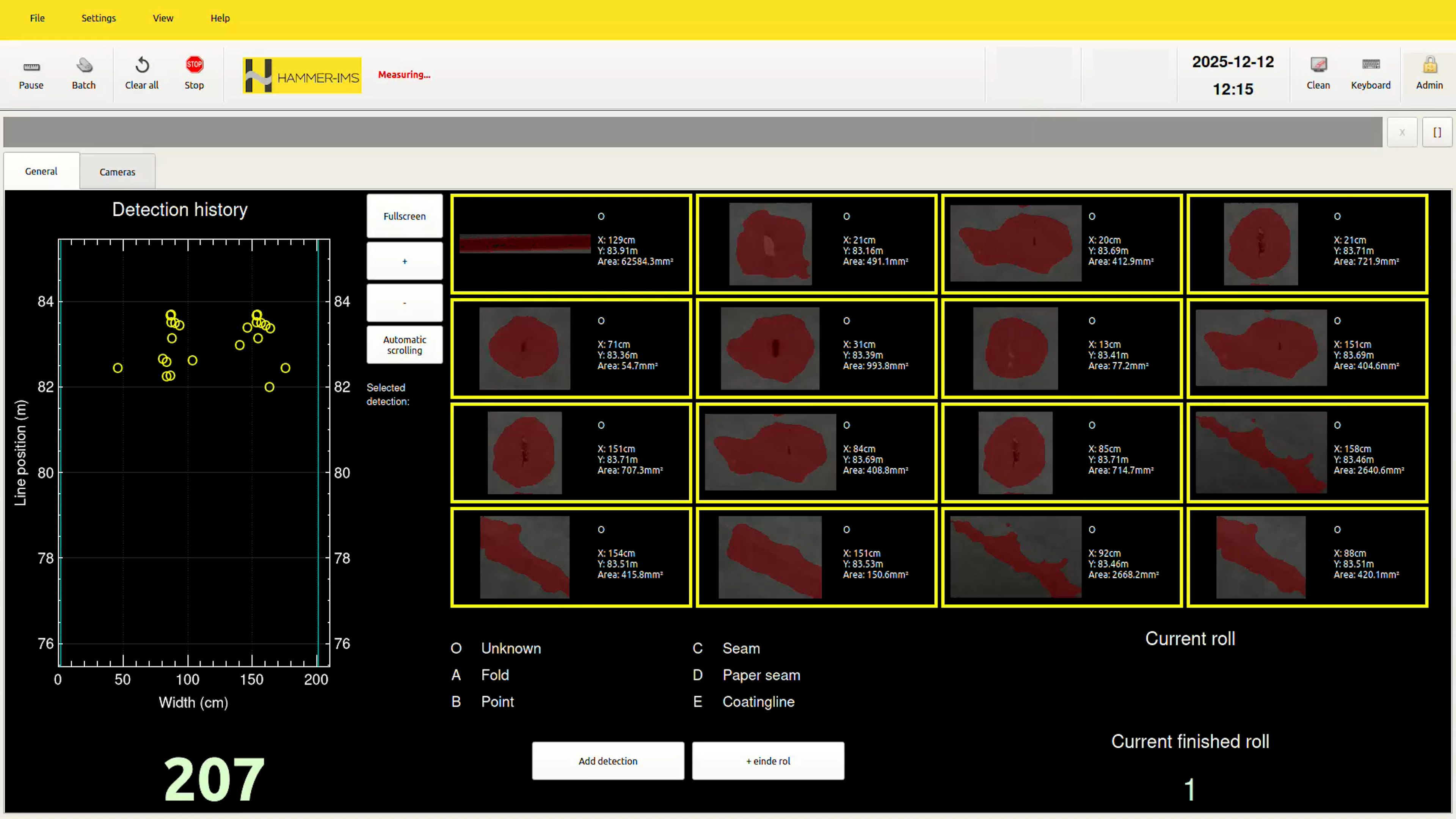
Before an AI can find a flaw, it must understand perfection. We use the collected images of clean material to train the system on what the regular product looks like. This allows the AI to identify anomalies—such as scratches, holes, or foreign objects—using advanced heatmap classification.
Phase 4: Collaborative Labeling
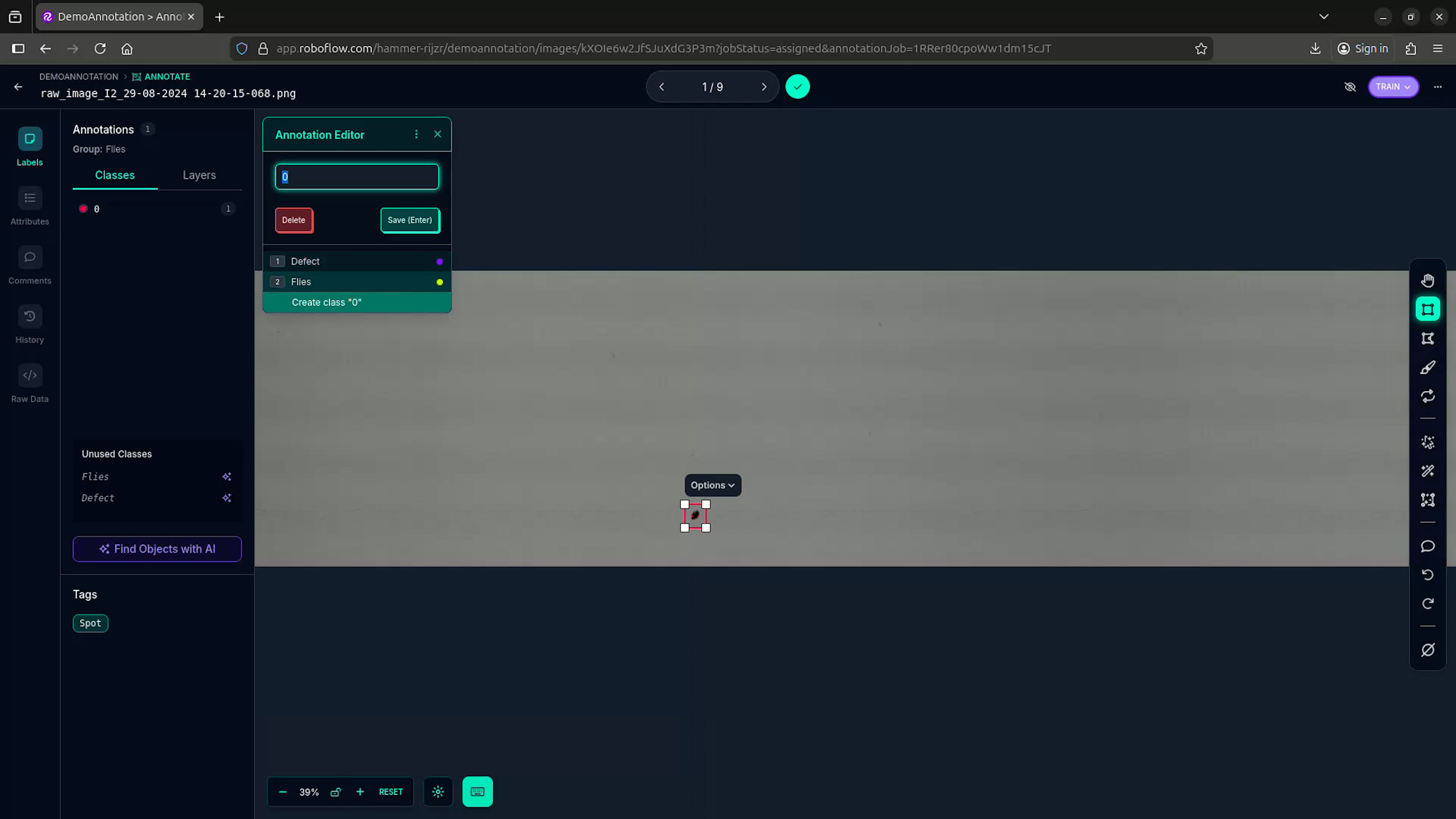
To transform a "detection" into a "classification," the system needs human expertise. Operators label the detected anomalies (e.g., "Type A Scratch" or "Oil Stain").
Real-time: Operators can classify on the fly.
Post-processing: Alternatively, the customer can classify images later to avoid interrupting the production workflow.
Phase 5: Full Autonomy & Data Ownership
Once enough data is labeled, we train a final AI model. This model is deployed back to the Edge-Vision system, where it now detects and labels defects autonomously, requiring zero operator interaction.
All detection data and images are stored directly on the customer’s servers. This empowers you to generate internal quality logs or export detailed reports for your end clients, ensuring total transparency.
Future-Proof Support
Industries evolve, and so should your inspection system. If new defect types emerge in the future, the model can be retrained with fresh images to stay ahead of the curve.
Furthermore, we don't just "plug and play" and leave. Hammer-IMS offers a 24/7 customer support hotline. Our team can troubleshoot the system remotely, ensuring that if an issue arises, downtime is kept to an absolute minimum.