1. Visual & Surface Defects (2D)
These defects are flat. They do not change the thickness of the material, but they change how it looks. Our 2D Area and Line Scan cameras use contrast and AI to spot them instantly.
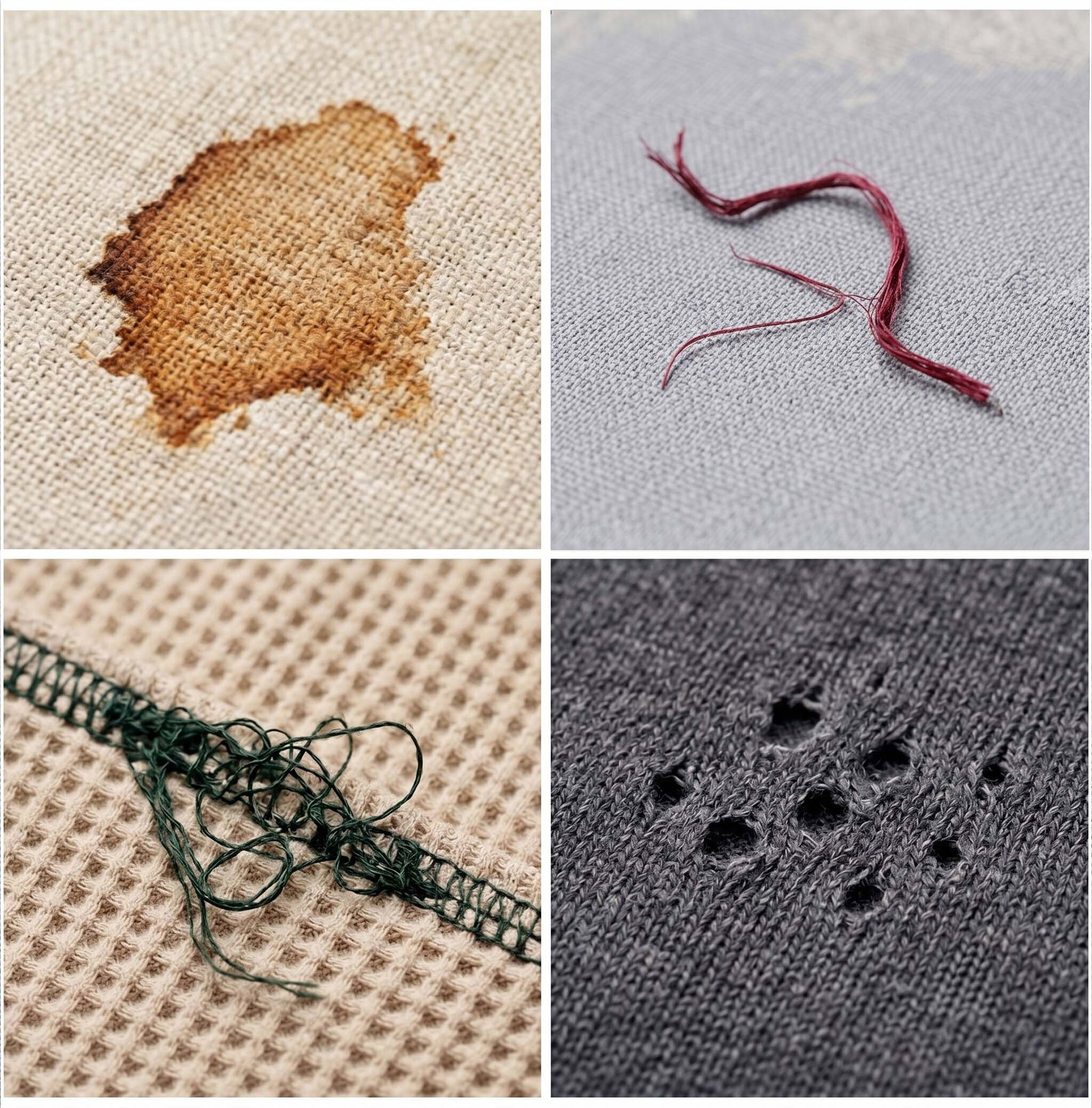
Stains & Discoloration
What it is: Oil drops, dirt, or chemical spills that leave dark or light spots on the material.
How we detect it: Our 2D cameras analyze the contrast value (the contrast difference between the spot and the clean material) to flag the issue instantly. Excellent for textiles, paper, and nonwovens.
Contamination & Foreign Objects
What it is: Insects, loose threads, or dust particles trapped on or inside the material web during production.
How we detect it: While standard rules can find high-contrast objects, our AI-powered models are perfect for recognizing irregular shapes like insects or hair, even on complex material textures.
Scratches & Streaks
What it is: Continuous horizontal or vertical lines caused by damaged rollers or sharp machine edges scraping the surface.
How we detect it: Line scan cameras capture these defects with zero motion blur. The software uses directional rules to find long, thin geometric flaws along the material flow.
Holes & Tears
What it is: Missing material where light shines completely through, threatening the strength of the product web.
How we detect it: By using backlight illumination underneath the material, a hole creates an extreme, unmistakable peak in light intensity that our rule-based software catches instantly.
Stitching Mistakes & Seam Defects
What it is: Broken threads, missing stitches, or crooked seams where layers of material are joined together.
How we detect it: Missing or incorrect stitches change the expected pattern of the surface. Because textile textures are complex, our AI-powered vision system is trained to know the "perfect stitch line" and instantly flags skipped stitches, loose threads, or open seams that standard rules might miss.
Pinholes
What it is: Extremely small, microscopic holes in thin materials like plastic films, aluminum foils, or coatings.
How we detect it: Because pinholes are so tiny, they require high-resolution cameras combined with a powerful backlight underneath the material. When the material passes over the light source, even a microscopic pinhole lets a bright beam of light through. This creates a sharp contrast peak that our software catches instantly.